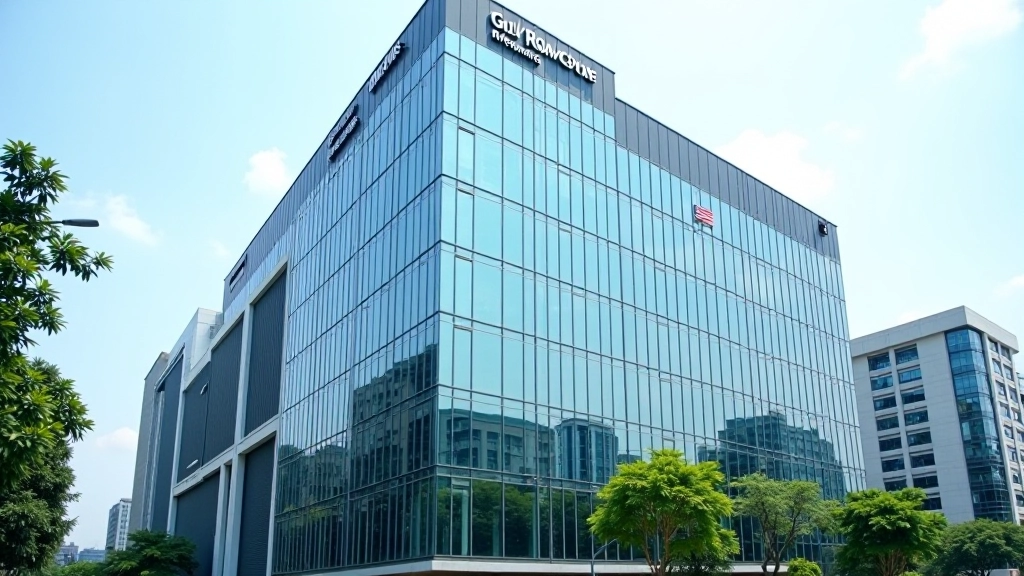

Special Economic Zones: Driving Malaysia’s Investment Appeal
Examine how Malaysia’s special economic zones attract multinational corporations and create competitive advantages for foreign investors.
Read ArticleUnderstanding the shifting patterns of foreign direct investment and what they mean for Malaysia’s economic future

Over the past five years, Malaysia’s position as a premier investment destination has evolved significantly. The nation’s ability to attract foreign capital reflects not just economic fundamentals, but also strategic policy shifts and sector-specific growth opportunities. We’re seeing patterns that tell us something important about where global capital is flowing — and why.
The numbers matter, but what really matters is what they reveal about investor confidence, sectoral transformation, and Malaysia’s competitive advantage in an increasingly complex global economy. From semiconductor manufacturing to renewable energy infrastructure, FDI inflows are reshaping the country’s industrial landscape.

Malaysia’s FDI landscape isn’t uniform across sectors. Manufacturing remains the dominant recipient of foreign investment, accounting for roughly 35-40% of total inflows annually. But here’s what’s interesting: the composition within manufacturing has shifted dramatically. Electronics and semiconductors continue their prominence, yet we’re witnessing growing investment in advanced manufacturing, precision engineering, and light industrial sectors.
The services sector — particularly financial services, professional services, and information technology — has grown from capturing 25% to nearly 35% of FDI over this five-year span. That’s not coincidental. Companies are increasingly using Malaysia as a regional hub for operations, management, and innovation centers. Infrastructure investment has also picked up momentum, driven partly by government initiatives focused on digital transformation and sustainable development.
FDI inflows don’t just represent capital movement. They signal investor confidence in our policy framework, our talent pool, and our strategic geographic position in Southeast Asia.
— Economic Development Analysis, 2026


Malaysia’s special economic zones have proven themselves as legitimate catalysts for FDI attraction. The major zones — including those in Johor, Penang, Selangor, and Sabah — consistently capture 45-50% of total manufacturing FDI. These zones aren’t just geographic advantages; they’re comprehensive ecosystems offering regulatory certainty, infrastructure quality, and business-friendly environments.
What’s driving this concentration? Tax incentives, streamlined approval processes, and reliable utility infrastructure are obvious factors. But investor surveys reveal something equally important: these zones have established networks of suppliers, skilled workers, and service providers. That ecosystem reduces investment risk and accelerates project execution. Companies aren’t just looking for a location — they’re looking for a functioning business environment.
The five-year trend shows strengthening performance, particularly in high-value manufacturing segments. Digital infrastructure improvements and sustainability certifications have made these zones increasingly attractive to multinational corporations prioritizing ESG commitments.
The Malaysian Investment Development Authority (MIDA) has evolved its incentive framework considerably. Pioneer status, investment tax allowances, and sector-specific incentives have been recalibrated to target high-technology, high-value activities. The framework now explicitly prioritizes green manufacturing, advanced semiconductors, and digital services.
Recent policy updates have introduced accelerated depreciation allowances for green technology investments and enhanced incentives for R&D activities conducted in Malaysia. These aren’t random adjustments — they’re strategic responses to competitive pressures from other Southeast Asian nations and emerging investment destinations globally.
The effectiveness shows in the data. Approved investments through MIDA have grown steadily, with an average project value increasing over the five-year period. That suggests quality improvement — fewer, larger, more substantial projects rather than volume-driven attraction.
Despite global chip market volatility, Malaysia maintains strong attraction for semiconductor manufacturing and assembly operations. Companies are diversifying supply chains away from concentration risk, and Malaysia benefits from established infrastructure and expertise.
Renewable energy and sustainable manufacturing projects are capturing increasing FDI shares. Solar panel manufacturing, battery production, and green technology sectors show accelerating investment momentum compared to traditional heavy industries.
Tech companies are establishing regional hubs, innovation centers, and service delivery operations. Cloud computing, data analytics, and software development centers represent the fastest-growing FDI segments in the services sector.
Global companies are actively moving away from concentrated supply chains. Malaysia’s proximity to major markets, trade agreement access, and manufacturing capabilities position it as a natural beneficiary of this structural shift.
Investment distribution across Malaysia hasn’t remained static. Traditionally, Selangor and Penang dominated the landscape, receiving 50-55% of total FDI. Over the five-year period, we’ve witnessed modest geographic diversification. Johor’s share has increased through semiconductor and electronics investments, while Sabah and Sarawak are attracting infrastructure and resource-processing FDI.
This geographic broadening reflects deliberate policy efforts to encourage balanced development. It’s also driven by land availability constraints in traditional zones and the rising costs of operations in saturated areas. Investors are discovering advantages in secondary locations with lower operational costs but comparable infrastructure quality.
Source countries have also shown variation. China remains a major FDI source, particularly for electronics and infrastructure projects. The United States and European nations dominate high-technology manufacturing and services FDI. Japanese investment, historically strong in automotive and electronics, continues steadily. Notably, Singapore, South Korea, and Taiwan are increasingly significant as FDI sources, reflecting intra-regional investment dynamics.
Malaysia doesn’t operate in isolation. Competition for FDI from Vietnam, Thailand, Indonesia, and Bangladesh has intensified significantly. These nations offer lower labor costs, ambitious infrastructure development, and increasingly sophisticated incentive packages. Understanding this competitive landscape is essential for grasping Malaysia’s FDI trends.
Malaysia’s labor costs exceed most regional competitors. The strategic response focuses on higher-value manufacturing where labor represents a smaller proportion of total costs. Automation investment and skill-based positioning help offset wage differentials.
Competitors are aggressively upgrading infrastructure. Malaysia’s response includes digital transformation initiatives, port modernization, and logistics hub development. These projects aim to reinforce Malaysia’s position as a premier operating location.
Attracting and retaining skilled workers has become critical. Malaysia’s advantages include English proficiency, professional education institutions, and established engineering talent pools. These strengths support positioning in sophisticated manufacturing and services.
Malaysia’s FDI story over the past five years isn’t one of explosive growth, but rather strategic consolidation and quality improvement. The nation has successfully maintained its position as a premier investment destination while subtly repositioning itself toward higher-value sectors. That’s actually a more sustainable narrative than headline-grabbing growth figures.
The diversification across sectors — from traditional manufacturing to digital services — reduces dependency on any single industry. The geographic broadening, though modest, demonstrates policy effectiveness in encouraging balanced development. The rising share of green and technology investments signals alignment with global capital trends.
Looking forward, Malaysia’s FDI trajectory will likely be shaped by three critical factors: how effectively the nation manages cost competitiveness through productivity improvements, whether it can secure talent for advanced manufacturing and services, and how successfully it positions itself in emerging technology sectors like artificial intelligence, advanced semiconductors, and renewable energy.
The five-year data doesn’t provide crystal-clear predictions, but it does reveal a nation making deliberate strategic choices. Those choices, more than raw investment volumes, will determine Malaysia’s economic trajectory in the coming years.
Understand the frameworks, zones, and opportunities shaping Malaysia’s investment landscape.
Browse FDI ResourcesThis article presents analysis and observations about foreign direct investment trends in Malaysia based on available economic data and public information. The information is provided for educational and informational purposes only. It’s not intended as investment advice, economic forecasting, or policy recommendation. Economic conditions change, and historical trends don’t guarantee future outcomes. Data sources include government reports, industry publications, and research institutions, but aren’t independently verified. For specific investment decisions, business planning, or policy analysis, consult with qualified economists, investment advisors, or government economic agencies. The views expressed represent analysis of available information and shouldn’t be construed as definitive statements about future economic performance.